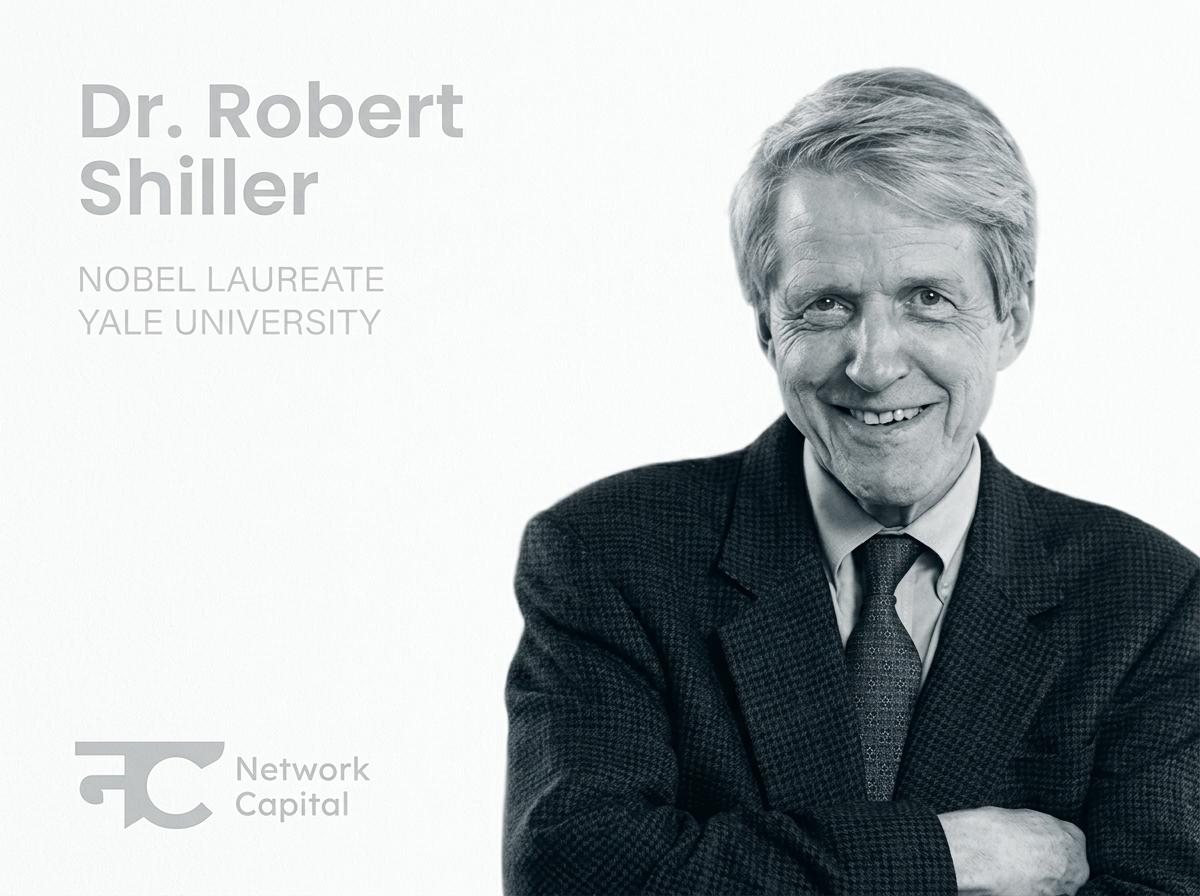
One of the best books about advertising was written by a Nobel Prize–winning economist.
Robert Shiller's Narrative Economics isn't about brands. It's about recessions, housing bubbles and financial panics. But its central idea will feel familiar to anyone who has ever sold anything: people don't act on facts. They act on stories about what the facts mean.
Rising home prices are a fact. "Real estate never goes down" is a story. Once enough people believe it, they borrow, buy and bid accordingly. Their behavior pushes prices higher, which makes the story look right. For a while.
Shiller treats stories like viruses. They pass between people, pick up details, merge with older beliefs and come back when the moment suits them. Millions of strangers end up acting on the same explanation of the world.
I read that and thought: he's describing my job. He's just describing it at the scale of an entire economy.
The story people take home
We talk about brands as things companies own: a name, a logo, a voice. But the valuable part is what people carry away, and what choosing the brand lets them say about themselves.
The product supplies the evidence. People supply the meaning, including meanings the company never intended. They decide what's worth paying for, which flaws to forgive and what to tell their friends.
I saw this up close with Chobani. Early on, its story belonged to trendsetters posting their morning yogurt on Instagram against whatever fab backdrop they'd found that day. Great start. Small story. To earn a place in family shopping carts at Target and Walmart, it had to become something bigger. Real food. A real punch of protein. Something you could feel good about handing your kid instead of a package of untoasted Pop-Tarts. The trick was making the story big enough for the breakfast table without losing the people who found it first.
The ad stops. The story doesn't.
Advertising helps a story travel by giving people something to picture and repeat. Shiller points out that the Laffer Curve owes part of its fame to the legend that it was sketched on a restaurant napkin. An economic theory got a dinner table and a prop. Suddenly you could tell someone about it.
But the company keeps writing the story after the ad stops running. A bank announces a better digital experience while a customer spends her lunch break resetting her password. She has her own take on the investment.
A brand that promises simplicity has made a promise about its invoices, its hold music and how hard it is to cancel. Eventually, somebody tries to cancel.
That's why contradictions are so expensive. They rewrite everything that came before. Generosity starts to look like a promotion. Conviction starts to look like copy.
Everyone gets a different version
Of course this is the part where AI shows up. It shows up everywhere now, which says something about the subject. "AI changes everything" might be the most contagious economic story of the decade. Shiller would note that it's moving money and behavior whether or not it lives up to the hype. It's also changing how brands tell their own stories.
For starters, it gives us a much better way to hear the stories customers are telling. Feed it thousands of reviews and call transcripts and you find the explanations people have settled on, including the ones you'd rather not hear.
Take a review that says, "They made me explain it all again." A sentiment report files that under negative. The better reading: this customer thinks you have no memory of them. Fix that before you write another line about personal service.
AI can also help one strong idea reach people who need different reasons to care. A patient considering surgery and a surgeon considering a job at the same hospital have different questions, but both need to believe in the same expertise. That's a huge creative opportunity: more ways into an idea, and useful work that used to cost too much to make.
The trouble starts when every version becomes its own experiment, rewarded for whatever gets its audience to respond.
Picture a restaurant advertising itself as a romantic hideaway to couples, a family favorite to parents and the place to get gloriously drunk to everyone else. Every ad might work. Then everyone arrives for dinner on the same night.
Personalization hides that collision for a while. Everyone sees a persuasive version of the company. Nobody sees the whole thing.
And the persuasion is real. In one study, GPT-4, given a few personal details, out-argued human debate opponents. That power can make a confusing financial product finally make sense, or answer the question a patient is afraid to ask. It can also find someone's insecurity and keep pressing on it.
Even honest personalization has a cost. Part of what makes a brand valuable is knowing other people recognize it too. Your choice means something because someone else gets the reference. If no two people ever hear the same idea, we get very good at winning individual responses while giving people less and less to believe together.
Somebody has to mean it
When a machine can produce endless convincing stories, convincing stops telling you much about who's doing the convincing.
MIT researchers found that people rated AI-written ads highly when they didn't know the source. When they learned a human had made the work, they liked it more. The researchers called it human favoritism, not AI aversion. I'd call it a clue about what's about to become scarce.
It gets worse when AI can fake agreement. Generate enough variations of a claim, add invented customers and testimonials, and it looks like independent confirmation, when really it's the same machine talking to itself. Repetition breeds familiarity, familiarity passes for truth, and people's behavior starts proving the story right. Shiller's virus now has a lab that breeds its own mutations.
Brands can be hurt by false stories about them. They can also get very good at telling false stories about themselves. The numbers look terrific until customers land on a simpler explanation: these people will say anything.
AI can tell us what people believe, spot the contradictions and try a thousand ways to say an idea. It can even recommend what a company should stand for. Somebody at the company still has to stand for it.
That means knowing which promises the business can keep, what it needs to change and what to refuse even when it tests well. That's work for experienced creative people, especially ones with a tireless machine at their elbow. Our job is to give a shared idea more reach, and to keep checking that it still holds together when everyone arrives for dinner.
AI can give everyone a different story. A brand is the part we still believe together.