• home
  • portfolio
  • about
Menu

FitzFolio

  • home
  • portfolio
  • about
×

For most of my career, thinking was something you did on the way to a deliverable. Buried in the hours. Billed as “strategy,” if at all.

Then the job got bigger. Channels multiplied. Customers started meeting brands everywhere, from the app to the hold music. The ad became one chapter in a story the whole company writes, and creative thinking moved from the edit suite into the boardroom. AI finishes the job. Making things is now nearly free. Deciding what’s worth making is the work.
That’s what I write about here.

Read a few.
If one sounds like the problem on your desk, let’s talk.

AI. And the extraordinary opportunity it presents to the internal creative department.

Bob Fitzgerald October 20, 2026

One of a company's most valuable assets has always depended on expensive outside infrastructure. AI changes that.

Take away the Pepsi brand and what is left?

To be deliberately reductive, sugary brown bubbly water.

Obviously, PepsiCo has formidable products, distribution, manufacturing and intellectual property. But billions of that value live somewhere else entirely: in people's heads. The name, the associations, the history, the feeling. Everything generations of people have collectively come to understand Pepsi to mean.

Companies know how valuable this is. We call it brand equity because that is exactly what it is. An asset.

And yet companies have long managed this asset in a strange way. They have owned it while outsourcing much of its care.

There was a good reason. Managing a modern brand requires research, strategy, writing, design, film, digital, social, production, testing and analytics. No internal brand leader could possess all of those capabilities, and maintaining them all inside an organization was expensive and impractical.

So companies built ecosystems around their brands. Advertising agencies. Design firms. Brand consultancies. Research companies. Production companies. Social, digital and media agencies.

This provided deep expertise and creative capacity. But it came with two unavoidable costs. The obvious one was money. The less obvious one was translation.

The company explained itself to the brand consultancy. The consultancy codified it. The marketing team briefed the agency. The agency briefed its creative teams. The creative teams briefed production companies. Other agencies handled other channels.

Everyone talented. Everyone trying to make the work better. And at every handoff, another opportunity to lose a little signal.

What gets lost is context. The strange thing somebody in sales knows about why customers actually buy. The lesson buried in a research deck from four years ago. The thing the CEO said once that explains the company better than the approved purpose statement ever has. The thousand small pieces of knowledge that make a brand itself are almost impossible to fit into a brief.

Then, every few years, companies change partners and begin explaining themselves all over again.

There is something fundamentally odd about that.

Brands are continuous. The system we built to manage them is not.

Agencies change. Teams change. Assignments begin and end. Research gets commissioned for a problem, presented and eventually disappears into a folder. But the brand keeps going.

For most of modern marketing, this was the price of having enough talent and capability to manage a major brand.

AI changes the equation.

So far, much of the conversation has focused on efficiency. Write this faster. Make that cheaper. Generate fifty versions. Resize everything. Automate production.

Those efficiencies are real. They may also be the least interesting consequence.

AI does not merely make the existing brand machine cheaper. It makes a different model possible.

For the first time, an accomplished leader inside the company can direct and draw on much of the research, strategy, creative and production capacity that once required an entire network of outside companies. Not enough to replace outside talent. Enough to change the relationship with it.

The person closest to the business can now also be the person continuously closest to the brand.

An internal leader has something even the best outside partner must work hard to acquire: context. They know not just what the brand guidelines say, but why. They remember what has been tried. They hear what employees say. They know what customers responded to and what leadership is trying to turn the company into.

AI gives that person leverage over all of it.

And something else becomes possible.

The brand can stop forgetting itself.

What the company learns this year does not have to be rediscovered five years from now. Research can accumulate instead of vanishing into old decks. Strategy can evolve instead of periodically starting over. Each piece of work can add to an institutional understanding of the brand rather than disappearing when the assignment ends.

The gap between knowing something and doing something about it gets shorter, too. Ideas can be explored, made visible, tested and improved while the original thinking is still fresh.

The original intent stays close to the work.

None of this means the end of agencies or outside creative talent. If anything, it should make the best of them more valuable.

A great filmmaker should make the film. A brilliant designer should bring a perspective the company does not have. An outside strategist should challenge assumptions everyone inside has stopped noticing. The right agency should bring ideas the company would never have reached on its own.

Outside perspective matters precisely because it is outside.

But there is a real difference between bringing outside expertise into the brand and sending the brand out to be managed.

The company can hold the center: its accumulated knowledge, standards, history, voice, judgment and direction. Then it can bring the best outside talent into that system wherever it makes the work better.

That should mean less translation, less relearning and less money spent maintaining infrastructure simply because the capability has to live somewhere.

The more important possibility is better work.

There is a catch.

Putting more capability inside an organization does not put the expertise there with it. AI can provide almost unlimited research, exploration, iteration and execution. It cannot provide decades of judgment about what is distinctive and what is derivative, what matters and what does not, or where a brand can credibly go next.

Put more capability in fewer hands and judgment matters more, not less.

Companies have always owned their brands.

Now they can own something more important.

The intelligence that builds them.
What the Economist Told the Copywriter

Bob Fitzgerald October 20, 2026

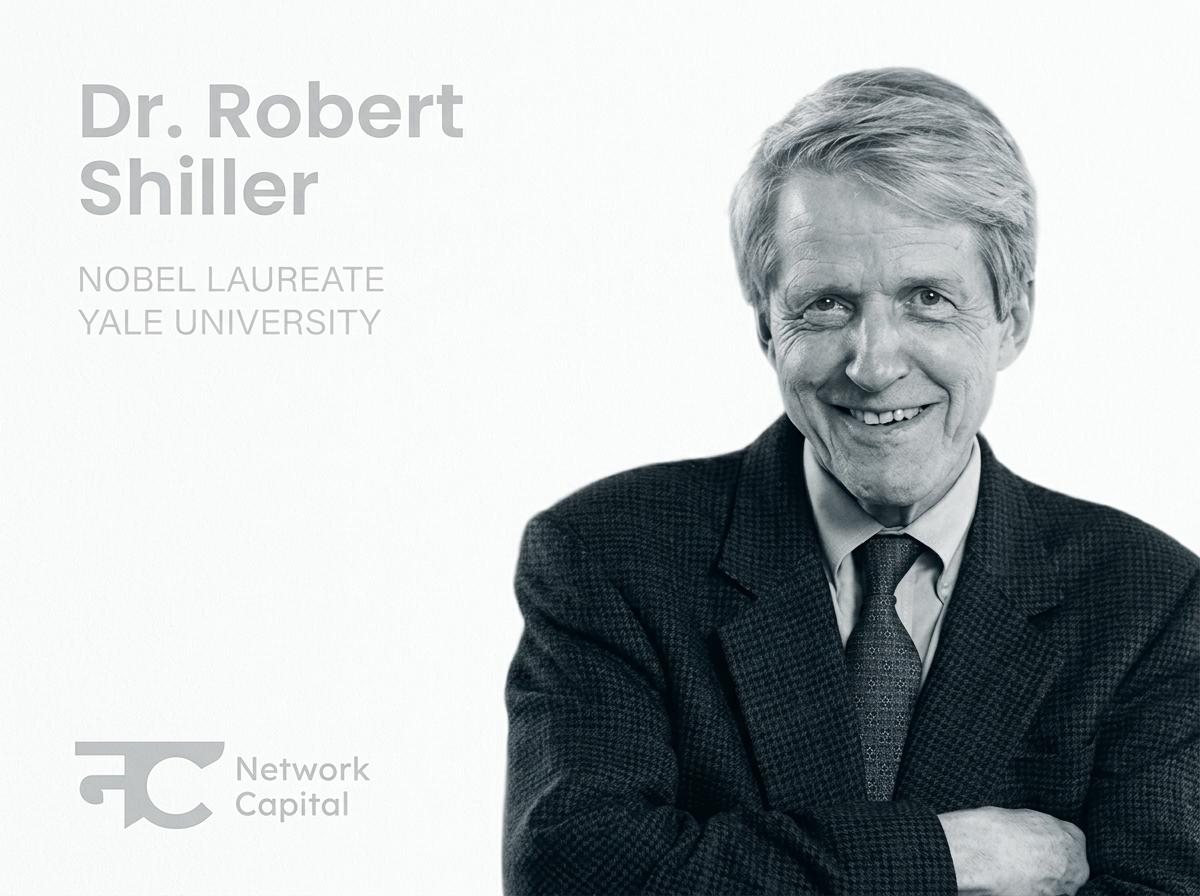
One of the best books about advertising was written by a Nobel Prize–winning economist.

Robert Shiller's Narrative Economics isn't about brands. It's about recessions, housing bubbles and financial panics. But its central idea will feel familiar to anyone who has ever sold anything: people don't act on facts. They act on stories about what the facts mean.

Rising home prices are a fact. "Real estate never goes down" is a story. Once enough people believe it, they borrow, buy and bid accordingly. Their behavior pushes prices higher, which makes the story look right. For a while.

Shiller treats stories like viruses. They pass between people, pick up details, merge with older beliefs and come back when the moment suits them. Millions of strangers end up acting on the same explanation of the world.

I read that and thought: he's describing my job. He's just describing it at the scale of an entire economy.

The story people take home

We talk about brands as things companies own: a name, a logo, a voice. But the valuable part is what people carry away, and what choosing the brand lets them say about themselves.

The product supplies the evidence. People supply the meaning, including meanings the company never intended. They decide what's worth paying for, which flaws to forgive and what to tell their friends.

I saw this up close with Chobani. Early on, its story belonged to trendsetters posting their morning yogurt on Instagram against whatever fab backdrop they'd found that day. Great start. Small story. To earn a place in family shopping carts at Target and Walmart, it had to become something bigger. Real food. A real punch of protein. Something you could feel good about handing your kid instead of a package of untoasted Pop-Tarts. The trick was making the story big enough for the breakfast table without losing the people who found it first.

The ad stops. The story doesn't.

Advertising helps a story travel by giving people something to picture and repeat. Shiller points out that the Laffer Curve owes part of its fame to the legend that it was sketched on a restaurant napkin. An economic theory got a dinner table and a prop. Suddenly you could tell someone about it.

But the company keeps writing the story after the ad stops running. A bank announces a better digital experience while a customer spends her lunch break resetting her password. She has her own take on the investment.

A brand that promises simplicity has made a promise about its invoices, its hold music and how hard it is to cancel. Eventually, somebody tries to cancel.

That's why contradictions are so expensive. They rewrite everything that came before. Generosity starts to look like a promotion. Conviction starts to look like copy.

Everyone gets a different version

Of course this is the part where AI shows up. It shows up everywhere now, which says something about the subject. "AI changes everything" might be the most contagious economic story of the decade. Shiller would note that it's moving money and behavior whether or not it lives up to the hype. It's also changing how brands tell their own stories.

For starters, it gives us a much better way to hear the stories customers are telling. Feed it thousands of reviews and call transcripts and you find the explanations people have settled on, including the ones you'd rather not hear.

Take a review that says, "They made me explain it all again." A sentiment report files that under negative. The better reading: this customer thinks you have no memory of them. Fix that before you write another line about personal service.

AI can also help one strong idea reach people who need different reasons to care. A patient considering surgery and a surgeon considering a job at the same hospital have different questions, but both need to believe in the same expertise. That's a huge creative opportunity: more ways into an idea, and useful work that used to cost too much to make.

The trouble starts when every version becomes its own experiment, rewarded for whatever gets its audience to respond.

Picture a restaurant advertising itself as a romantic hideaway to couples, a family favorite to parents and the place to get gloriously drunk to everyone else. Every ad might work. Then everyone arrives for dinner on the same night.

Personalization hides that collision for a while. Everyone sees a persuasive version of the company. Nobody sees the whole thing.

And the persuasion is real. In one study, GPT-4, given a few personal details, out-argued human debate opponents. That power can make a confusing financial product finally make sense, or answer the question a patient is afraid to ask. It can also find someone's insecurity and keep pressing on it.

Even honest personalization has a cost. Part of what makes a brand valuable is knowing other people recognize it too. Your choice means something because someone else gets the reference. If no two people ever hear the same idea, we get very good at winning individual responses while giving people less and less to believe together.

Somebody has to mean it

When a machine can produce endless convincing stories, convincing stops telling you much about who's doing the convincing.

MIT researchers found that people rated AI-written ads highly when they didn't know the source. When they learned a human had made the work, they liked it more. The researchers called it human favoritism, not AI aversion. I'd call it a clue about what's about to become scarce.

It gets worse when AI can fake agreement. Generate enough variations of a claim, add invented customers and testimonials, and it looks like independent confirmation, when really it's the same machine talking to itself. Repetition breeds familiarity, familiarity passes for truth, and people's behavior starts proving the story right. Shiller's virus now has a lab that breeds its own mutations.

Brands can be hurt by false stories about them. They can also get very good at telling false stories about themselves. The numbers look terrific until customers land on a simpler explanation: these people will say anything.

AI can tell us what people believe, spot the contradictions and try a thousand ways to say an idea. It can even recommend what a company should stand for. Somebody at the company still has to stand for it.

That means knowing which promises the business can keep, what it needs to change and what to refuse even when it tests well. That's work for experienced creative people, especially ones with a tireless machine at their elbow. Our job is to give a shared idea more reach, and to keep checking that it still holds together when everyone arrives for dinner.

AI can give everyone a different story. A brand is the part we still believe together.

you say you want a revolution

Bob Fitzgerald October 20, 2026

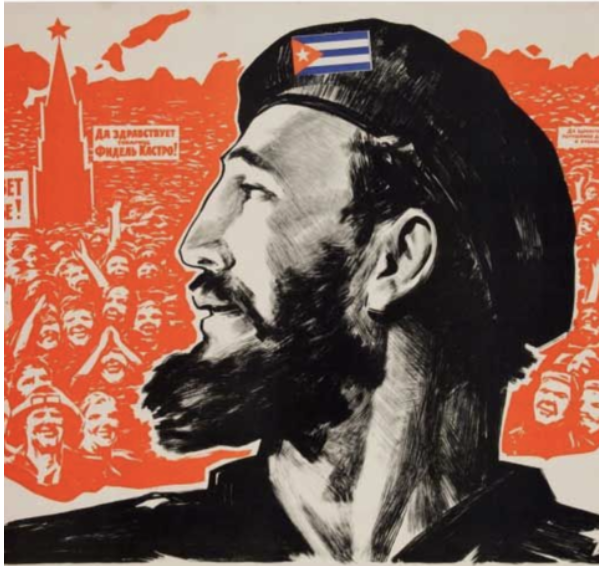
For some reason, on some job, at some time in the past I needed a quote about revolution. Now my standard approach in a situation like as I've described I pretty much grab a Beatles lyric. (see above) But in this situation I needed something different. Which led me to this – “A revolution is a struggle to the death between the past and the future.” Fidel Castro.

This quote worked for that project, whatever it was. And though why I needed it faded from my memory, the quote stuck with me.

The quote resurfaced in my head just the other day. I was in the midst of a business/social gathering. Swirling around me were the usual phrases advertising veterans exchange these days - “Everything’s changed” “Advertising is a dying art.” “It used to be about the big idea.” And “Those late-night, post-shoot, chocolate milkshakes at Shutters were pretty fucking good, weren’t they?”

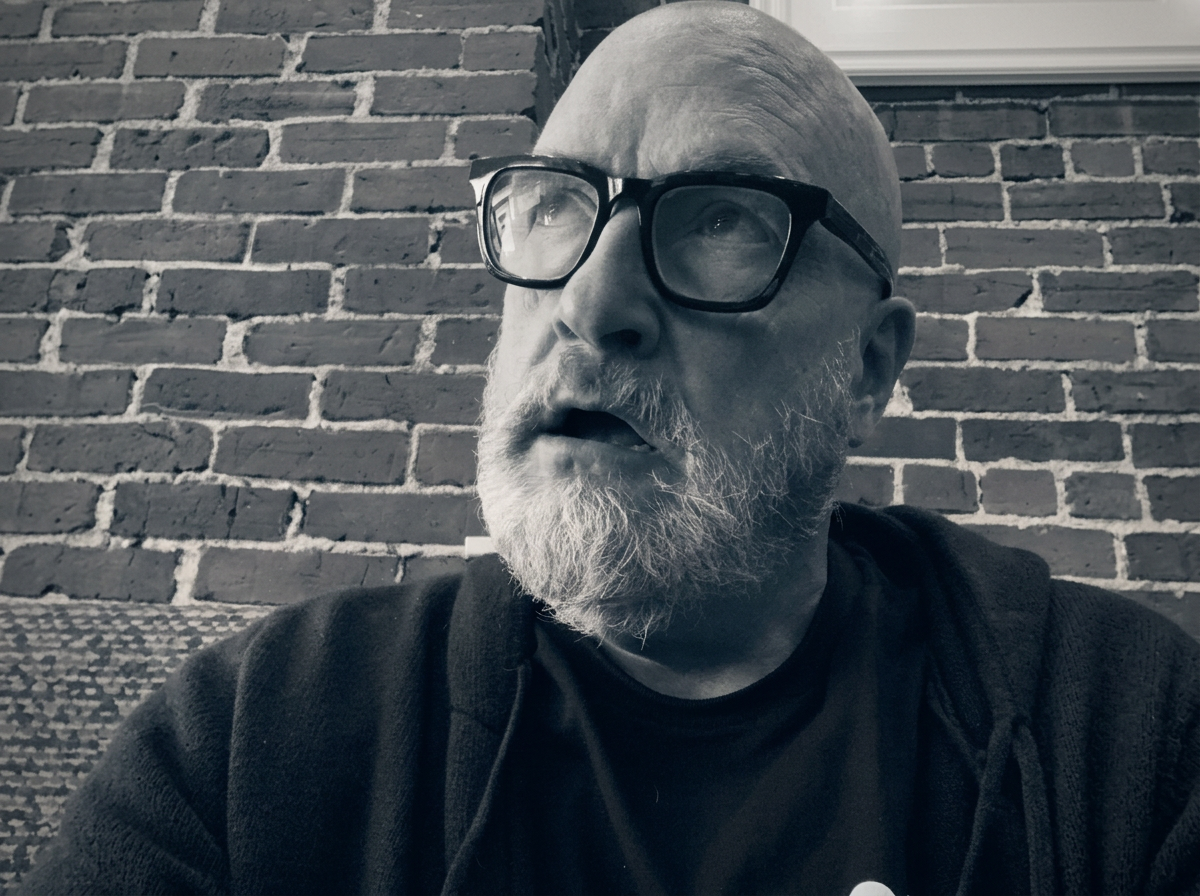
With my grey beard, reading glasses and fond memories of clouds of spray mount wafting through the studio, I am an old man in what’s always seemed to be a young person’s racket. And as a descendent of fine Irish stock I do love to lament the fading glow of a once golden time. But not this night. Instead it was the sage words of El Comandante. And a desire to talk about something else.

The past is the past. And the past always loses to today, to the future. And while there were some really great things – weeks of nothing but concepting, ordering sushi angry, chair massages, lunching at Balthazar, etc. I think, if I were honest, the thing I miss the most is not really working so hard.

Back then, occasionally, there were truly prodigious outflows of effort. But today, I work hard, a lot, on numerous different things, almost all of the time. In the car, in the shower, in the checkout line - thinking, thinking, thinking. Discovering this, understanding that, learning another thing about some other thing.

I’m just now realizing about all the work is how much better a creative it has made all of us. I knew how to deliver a killer spot or create a great campaign. Today I know how to deliver killer sales numbers or create a movement. Just think about how much more powerful we actually are today compared to those yesterdays when we were convinced we truly were the most important people in just about any room.

Were the good old days better? In some ways, undoubtedly, yes.

But given a choice I’ll take being better over better days. The tools we have, the means we can deploy. The unfolding understanding of human nature. The growing belief in the age-old power of narrative in our work. All of it makes our work, our effectiveness and ourselves better.

Today I am. Tomorrow I will be.

And it’s going to be all right.

narrative.


all the way down.

Bob Fitzgerald May 4, 2026

I came of age as a creative director during my years working at Arnold in Boston. It was there I learned, amongst other things, that there was more to our end of the business than just a great idea. That clients bought as much into the people as the idea they were presenting. And that even a perfectly self-evident brilliant idea still needed a story behind it to sell.

Another way of thinking about it would be that in addition to the “what” of the big idea one had to sell the “who” the people whose idea it was and the “why” reason it is a good idea in order to really get people to buy in.

I mention my time at Arnold because I was there in the heyday of their great and powerful ‘brand essence’ movement. Led by Fran Kelly, embodied in the VW work, and central to just about every new business pitch, strategy doc or even elevator conversation we were the agency of BRAND ESSENCE. And it worked. It was wildly successful.

At the heart of it all was the idea that brands have a rational meaning and an emotional meaning in the lives of consumers. Like in VW it was rational – affordable German engineering – and emotional – ‘drivers wanted’ with a very psychologically loaded definition of what who and what a driver is.

Brand Essence was the Kool-Aid they were serving and I drank deeply of it. But in the back of my mind I always had an unspoken, and probably heretical, idea about the rational/emotional framework. At some point, I realized that the rational part of the equation was there to sell the client on the idea and the emotional was truly the means of connection our work provided between our clients and their consumers.

I believe that the current focus on story and narrative are an affirmation of my earlier thinking. No one I’ve ever known has found a braggart convincing, appealing or even tolerable.

Furthermore, people are irrational. They don’t live their lives based on facts. Our feelings and emotions are at the heart of our decisions. Looking at your own life can probably prove this true to you but if not there are numerous books to turn to. Dan Ariely’s Predictably Irrational, Daniel Kahneman's Thinking Fast and Slow and most recently Robert McKee and Tom Gerace’s Stroynomics.

People like to like the things that are in their lives. Stories help them do that. Facts, not so much. Facts can help us rationalize why we like something but they’re not great at making people actually feel anything.

Back when TV ruled and commercials could interrupt people’s lives, stuffing communications with facts brought some effect. But even then, commercials that actually told stories were the ones that really made a difference.

And today with endless channels of communication, ad blocking, social sharing and all that, most marketers don’t even have the means to force feed a bunch of facts to anyone.

Story is the way. Emotional connection is the means. And although the state of things today have made understanding this imperative, it has always, always been the truth. 

in closing

Bob Fitzgerald September 20, 2025

Yes, the world has changed.
The old model is dead. Agency of record, gone. 
TV spend has been surpassed by mobile.
And social. And content. And change, change, change.

And finally AI

But my job, our job, remains what it has always been -
generate meaning, tell stories, provide context,
and above all, create connections.

Search Posts

No results found

the big big idea

AI has made creative capacity almost unlimited.

It can research, write, design, produce, test, adapt and try again at a scale no creative person could match. It can help a brand remember what it has learned, find patterns in what people say and do, explore ideas once too expensive to pursue and turn one story into a thousand expressions.

That changes the economics of creativity. It changes where brands can be managed, how ideas are developed, how stories travel and how precisely communication can be shaped around the person receiving it.

But capacity is not direction.

More ideas do not tell us which idea is good. More data does not explain the person behind the click. More fluent content does not make a brand memorable. A story can spread without being true, coherent or worth believing.

Someone still has to know what we are trying to say. What a brand can credibly own. What people might feel, remember, repeat and do. What is merely clever and what is actually true. What to pursue. What to protect. What to keep working on.

And which idea is the one.

AI has made almost anything possible.

Which makes knowing what to do with it the whole job.

Bob Fitzgerald - 617-835-9655 - bobfitzgerald@me.com Powered by Squarespace